Every Monday I open my feed and something changed again. A new model ships. A new feature nobody asked for shows up. A headline claims the whole game just flipped, for the fourth time this month.
You've probably felt this too: the exhausting kind of "keeping up" that never actually catches you up, because the target moves again before you finish reading the last update.
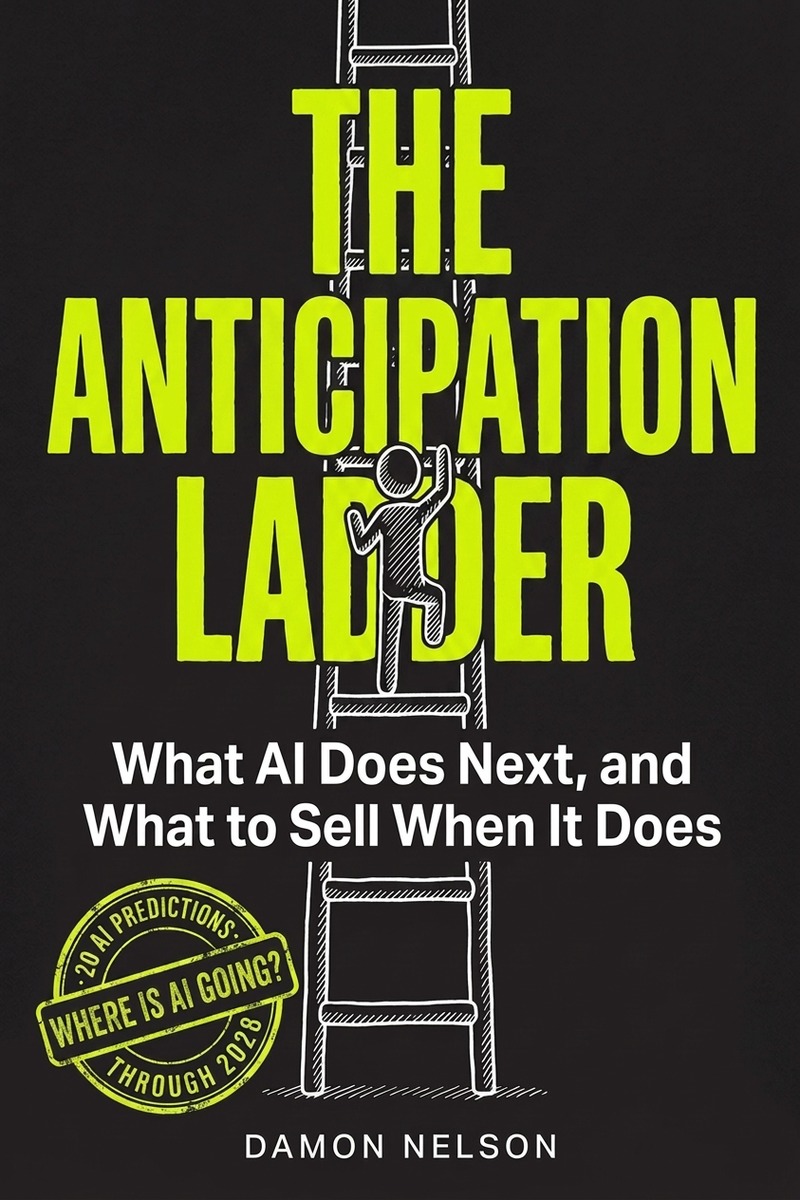
I just sent a book to print about the way through that noise. It's called The Anticipation Ladder, and I suspect a few of you have been waiting for this one without knowing it yet.
The habit that started this book
Back in January, I sat down and recorded a voice memo about where I thought AI was headed and what it meant for people like us. Then I did the one thing most forecasters never do. I set a reminder, waited six months, and checked my own work.
Some of it landed almost exactly. Some of it got stranger than I'd have dared say out loud into a microphone. I predicted the big AI labs would start buying up the hottest agent startups, and one of them did, loudly. Then a government made them give the company back. Nobody predicts the un-sale.
These days the predictions get stress-tested twice a month, live, in front of a room of marketers hunting for exactly this kind of edge. If a prediction couldn't survive that room, it didn't make the book.
Four rungs, and the headlines finally make sense
Here's the trick that changed how I read every AI announcement that lands in my feed now. Almost all of it sorts onto one simple ladder, four rungs tall.
At the bottom, a tool just answers whatever you type into it. A couple rungs up, it starts noticing your next move before you finish typing the question. Near the top, it stops showing you how at all, and just asks if you'd like it to go ahead and handle the whole thing.
That middle rung already shipped, by the way. The rebuilt Siri landing in half a billion pockets this year is a tool quietly preparing things before anyone asks, at a scale most of us haven't fully clocked yet.
Once you can place any tool on that ladder in about one second, the confusing part of AI mostly disappears. What's left is the useful part: knowing exactly what a business sitting on a given rung needs next, and what that's worth to them.
What you'll actually find inside
The book is built in four parts, each one doing a specific job.
- The four ideas that explain everything else. What genuinely changed under our feet this year, in plain language, with every term defined the moment it shows up.
- Twenty numbered predictions, split across the next six months and the next eighteen, one per spread, built to be dog-eared and argued with over coffee.
- The playbook. The audits, the offers, and the small recurring services sized for a business of one, matched directly to each prediction.
- The dinner-table chapter. Jobs, kids, and what all of this actually asks of us as people, once the business talk is finally done.
The part I'm proudest of
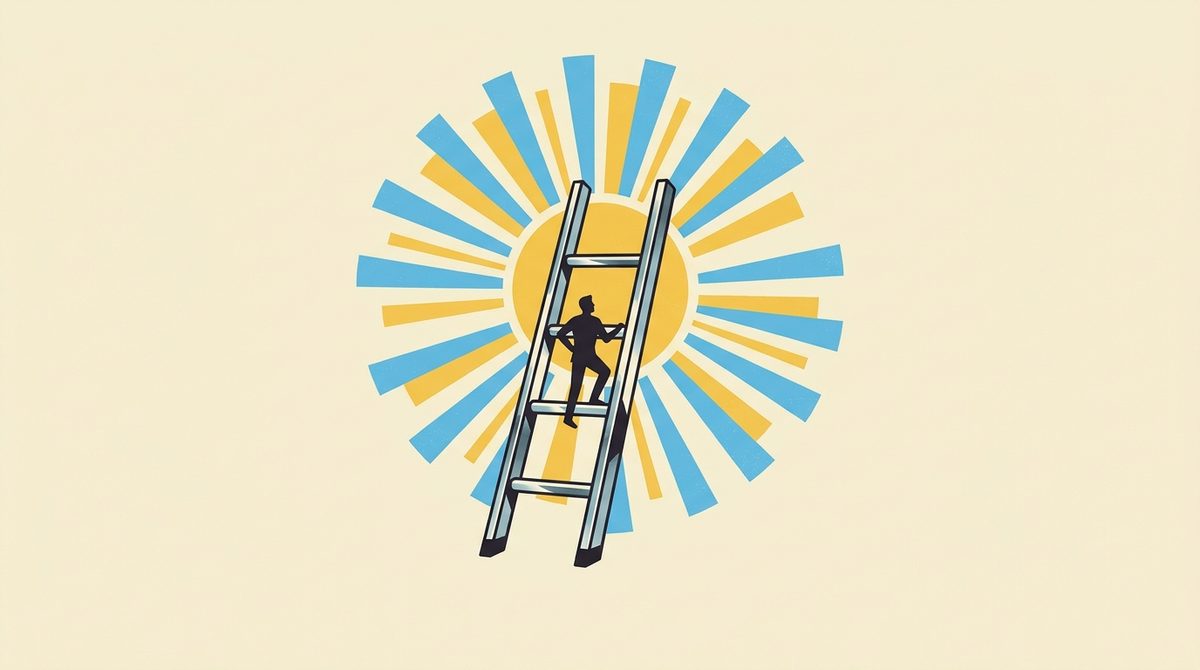
Every chapter carries the same small hand-drawn climber, working their way up a ladder that runs the entire length of the book.
In the introduction, they're reaching for the very first rung, unsure of their footing. By the playbook chapters, they've got a tool belt on and they're clearly building something as they climb. On the final page, they've reached the top rung, and they're the one reaching a hand back down for whoever's still climbing.
Nobody planned that on purpose. It just turned out to be exactly what the book is actually about.
The honest part
I'm not going to pretend one book can predict two years of AI with perfect accuracy. Nobody can do that, and anyone who tells you otherwise is selling you something else entirely.
What a good ladder actually gives you isn't certainty. It's a lens you get to keep using on the next headline, and the one after that, long after any single prediction in these pages has come and gone. That's the part I stand behind completely.
Get there first
You won't finish this book caught up on AI. You'll finish it ahead of it, which is a better place to stand.
The Anticipation Ladder is out now on Amazon. Twenty predictions, one ladder, and the whole map for turning what AI does next into something you can actually sell.