Somewhere along the way, marketing your business became a second full-time job. The one that never pays overtime.
You write the posts. You chase the leads. You film the video, edit the video, hate the video, post it anyway. And every Monday the whole treadmill resets like none of it ever happened.
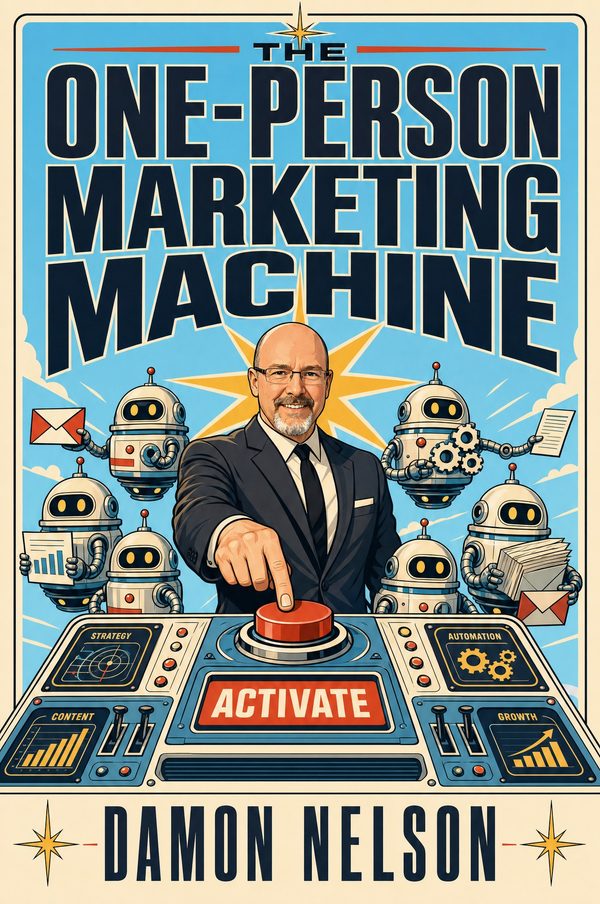
I just finished writing a book about the way out. It's called The One-Person Marketing Machine, and the print file went out the door this week. Let me show you what's inside, because I think some of you have been waiting for this one without knowing it.
The number that made me write it
Depending on the survey, up to two-thirds of small businesses now say they "use AI." Sounds like you missed the gold rush, right?
Look one layer deeper and the picture flips. When researchers stopped asking owners what they say they do and looked at what businesses actually pay for and run every day, the number collapsed to fewer than one in five. The businesses with AI truly wired into how they operate? Around 8%.
Two-thirds have typed something into ChatGPT. Fewer than one in ten have built anything with it. That gap is the whole opportunity, and that gap is the book.
Dabblers and builders
Most owners tried AI the way you'd try a sample at Costco. It wrote a caption. Fine. It wrote an email. Also fine.
Then they went right back to doing everything the hard way, because a tool that writes one caption doesn't change your Tuesday.
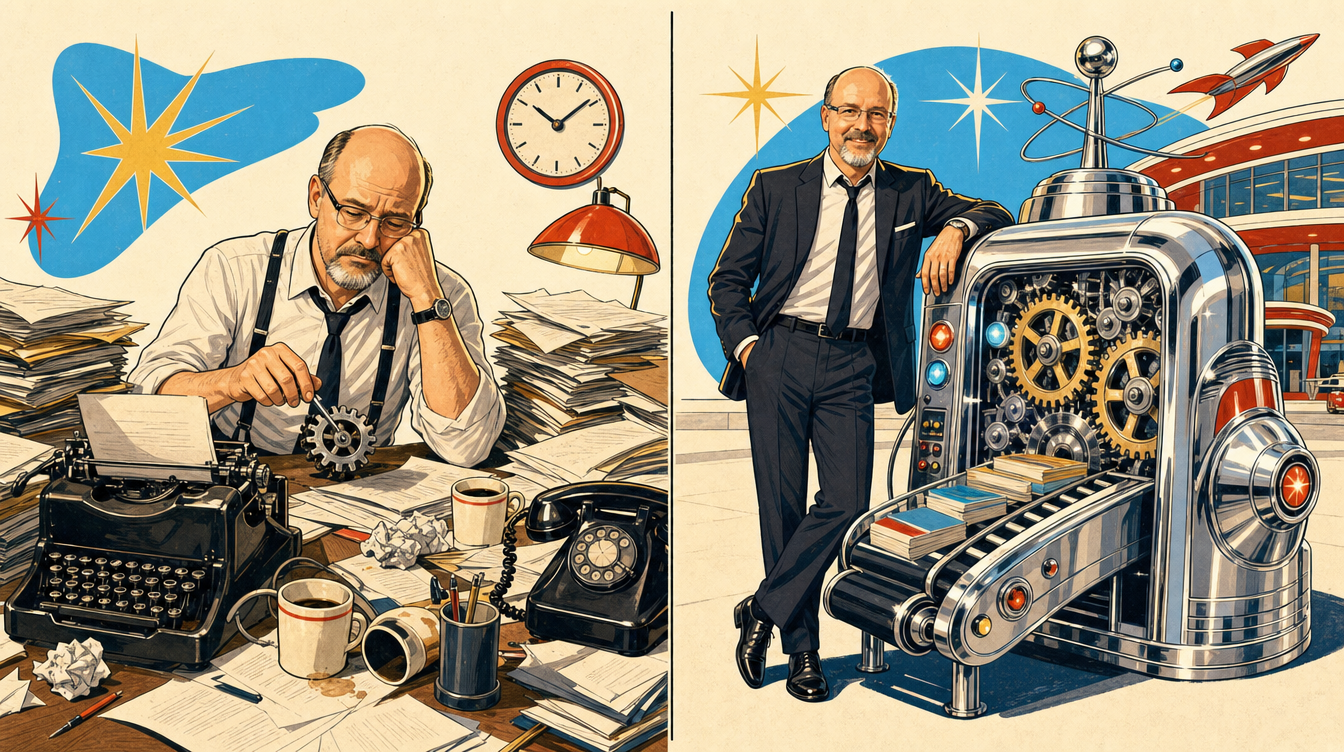
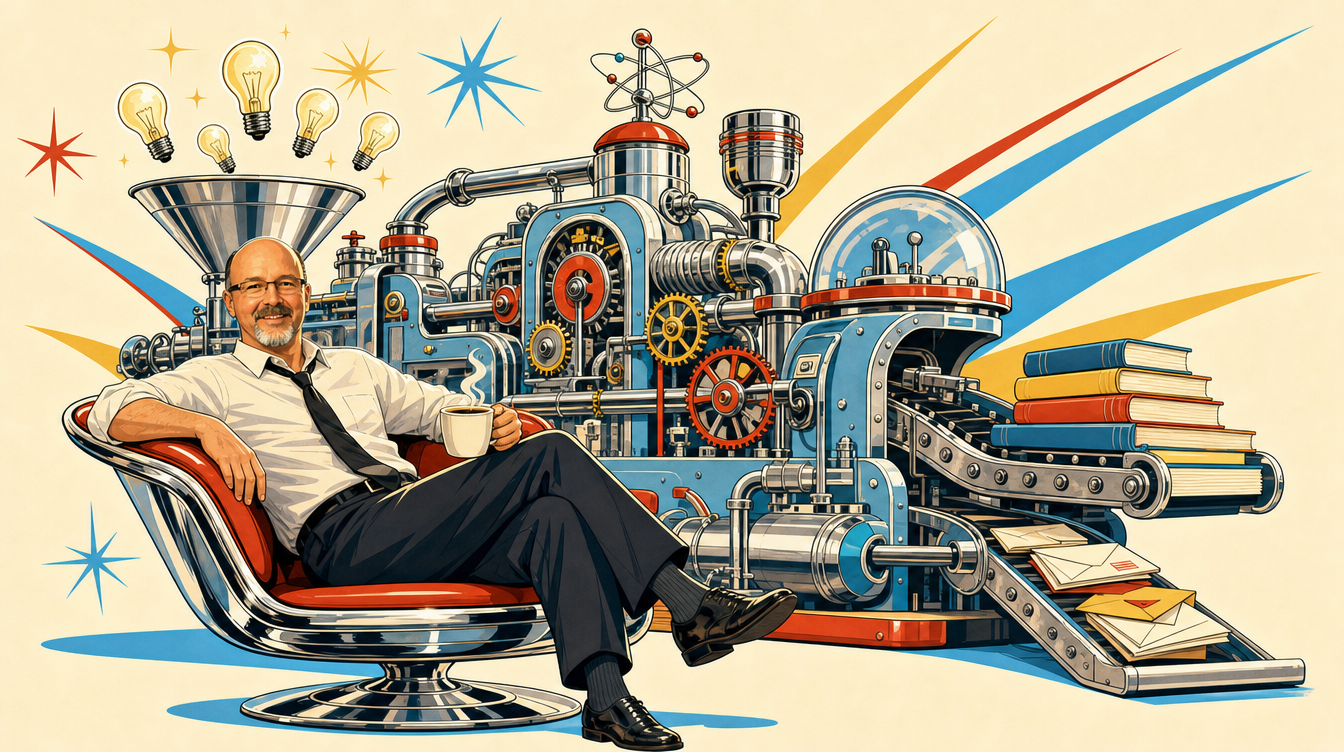
Meanwhile, a small group of operators quietly stopped using AI and started owning systems built on it. Their content goes out whether they're at the desk or not. Their follow-up happens while they sleep. And every month the distance between them and the dabblers gets wider, because systems compound and effort doesn't.
The book opens right there, with a choice: stay a dabbler, or become an operator. Everything after that is the build manual.
What you'll actually see inside
The spine of the book is a five-layer framework. Each layer gets its own chapter, its own build steps, and its own quick-start you can run the same week you read it:
- The Input Engine. Where ideas come from so you never stare at a blank page again. The Collected Stories method, the One-Problem-One-Solution method, and your Idea Bank.
- The Content Engine. Making AI sound like you, not like everyone else's AI. One idea becomes ten assets without losing your voice.
- The Distribution Engine. Publishing is the hidden time drain nobody talks about. This layer makes it something you set up once and improve forever.
- The Agent Layer. What AI agents actually are, minus the hype. Hint: they're not chatbots.
- The Monetization Layer. Turning attention into revenue with working tools instead of PDFs nobody opens.
There's a full chapter on why the old marketing stack is breaking, plus an objections chapter that answers the questions you're already asking. "Is it too late?" "Do I need to be technical?" "What if I build it and it doesn't work?"
The Starter Pack appendix adds fill-in templates, the Multiplication Mega-Prompt, agent outreach scripts, and a weekly review checklist that takes about 40 minutes.
My favorite part is the one you'll flip to first
Here's the thing I'm most proud of. The book is illustrated with hand-drawn-style pen-and-ink figures, and across the chapters they tell their own story.
In Chapter 3 you see a lonely funnel bolted to a workbench. By Chapter 4 it's connected to gears. Chapter by chapter, the machine literally assembles itself in front of you, until Chapter 7 shows the complete five-stage machine running end to end, input to revenue. You watch the thing get built as you learn to build it.
The last image in the book has no caption at all. It's just a quiet Tuesday morning, and by the time you reach it, you'll know exactly what it means.
The honest part
I'll be straight with you, because this is where most AI books lose me. This is not "push a button, get rich." The book is blunt about that.
Two of the principles up front are Guided Automation and the Human Review Layer, and neither one is optional. You front-load the effort. You stay the editor-in-chief. The machine does the heavy lifting, but it's your machine, with your voice and your judgment wired in.
I spent twenty years in brick-and-mortar before I ever touched online marketing, and I've watched too many good people buy magic and end up with nothing. This book is the opposite of magic. It's plumbing. Beautiful, compounding, works-while-you-sleep plumbing.
The window is open
That's actually how the book closes. The machine is real, you know how to build it, and the window is open, but it won't stay this wide. The 8% becomes 30% eventually. The question is which side of that line you're standing on when it does.

Writing this one changed how I think about my own Tuesdays. I suspect reading it will do the same for yours.
The book is headed to print now. Want to know the moment it's live? Stay close. Next post, I'll walk you through the first layer and you can start building before the book even arrives.